Andrei Zaharov
I am Andrei Zaharov, 46 years old, born in Ukraine into a military family. I have an economics degree specialising in Management. I spent a significant part of my professional career working in sales, including at Mars Ukraine.
Since 2021, I have been living and working in the United Kingdom, in Bristol. I currently work as a Team Leader in the engineering and manufacturing sector, where I am involved in the design and installation of specialised equipment for commercial vehicles.
However, my main creative interests for many years have remained invention, design and the creation of unusual objects.
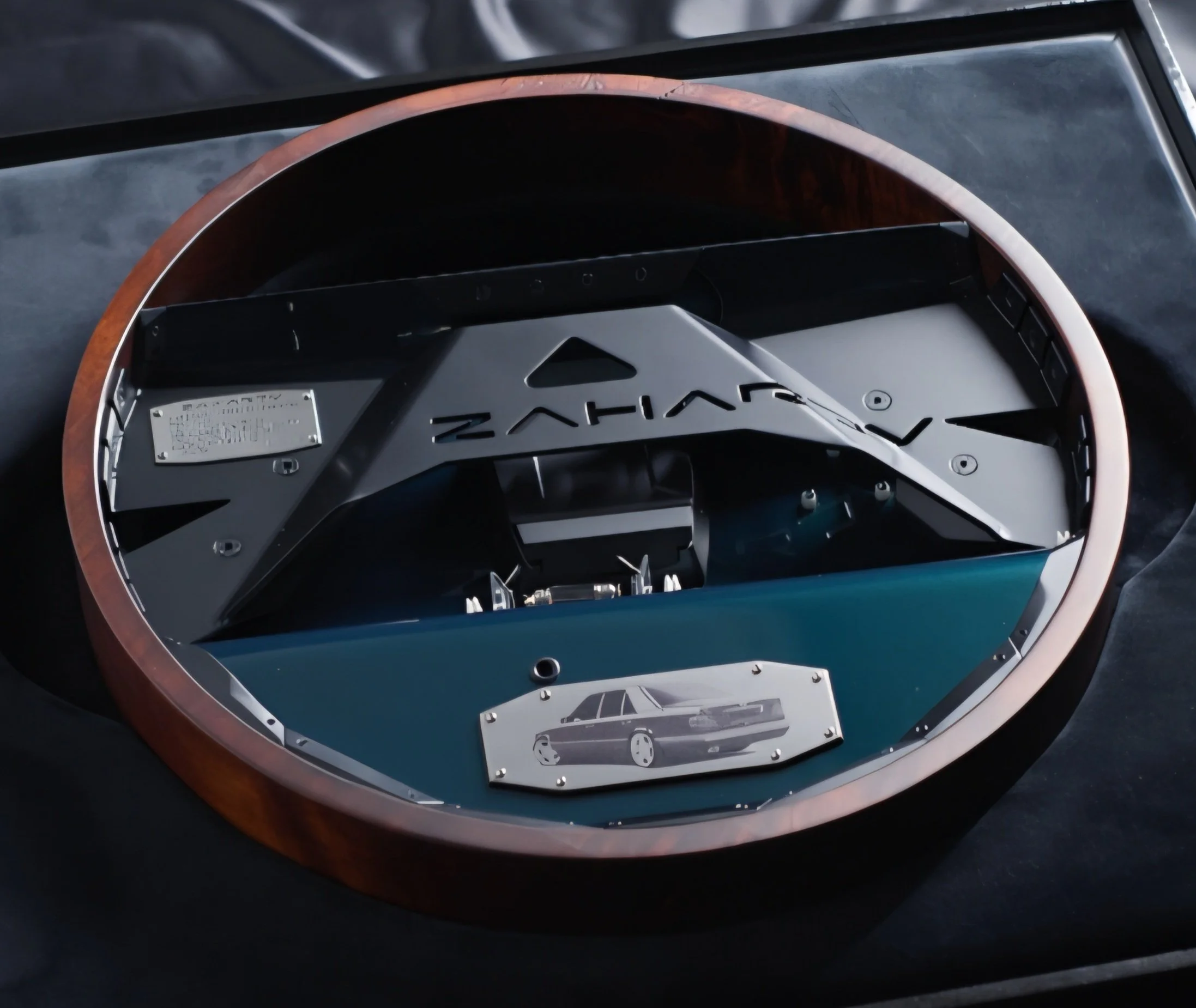
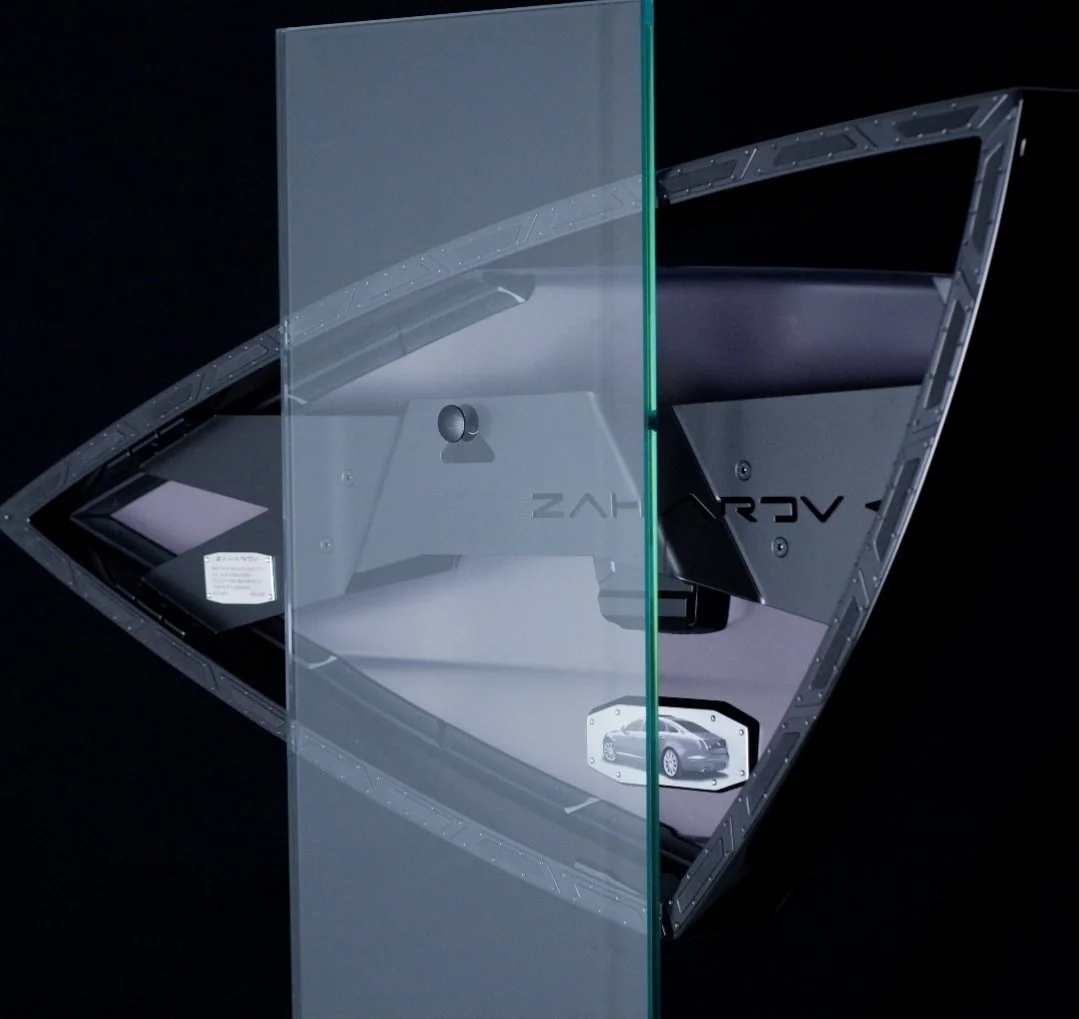
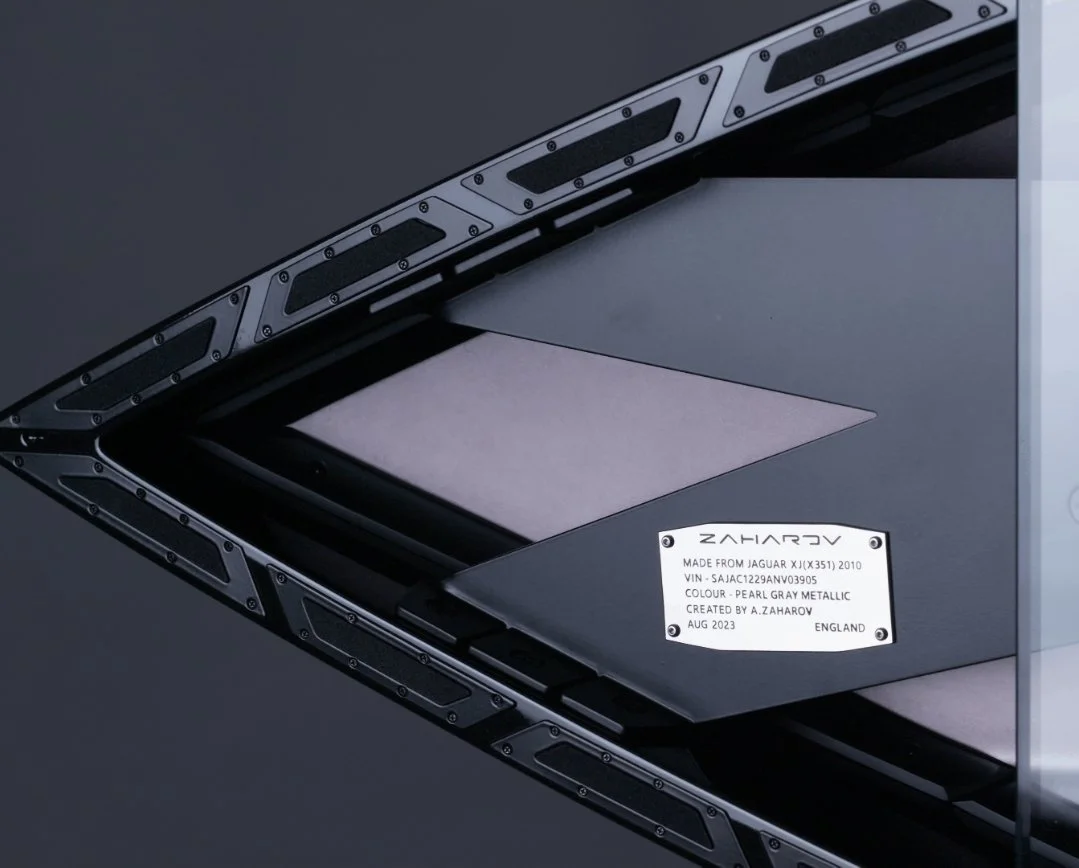
As an independent artist, over the past few years I have devoted my time to creating unique wall clocks made using original fragments of real automobiles. My idea is not simply to turn part of a car into a clock case. I aim to show the beauty and character of the original automotive design in a new form, while also revealing what is normally hidden from view — the internal structure of the vehicle.
Particular attention in my work is given to the rear side of the clock. This is what allows the viewer to see the internal structure of the automotive component and understand what is beneath the “outer shell” of the vehicle. Designing and finishing this part often takes a significant amount of the entire creative process.
For me, the idea of giving a car that has ended up in a scrapyard a new life is also very important. Instead of simply becoming an unwanted part, a fragment of the car is transformed into an independent design object that preserves part of the history of the automotive industry.
At the same time, clocks are only the beginning for me. I am currently working on larger and more complex projects, creating large-scale designer wall art objects from original automotive components.
I am inspired by the idea of developing a new artistic direction in which original automotive parts become the foundation for creating sculptural clocks and other works of contemporary design.
This year, I also participated in the automotive exhibition at Longleat, where I had the opportunity to present my work and share my artistic approach with visitors and fellow automotive enthusiasts.
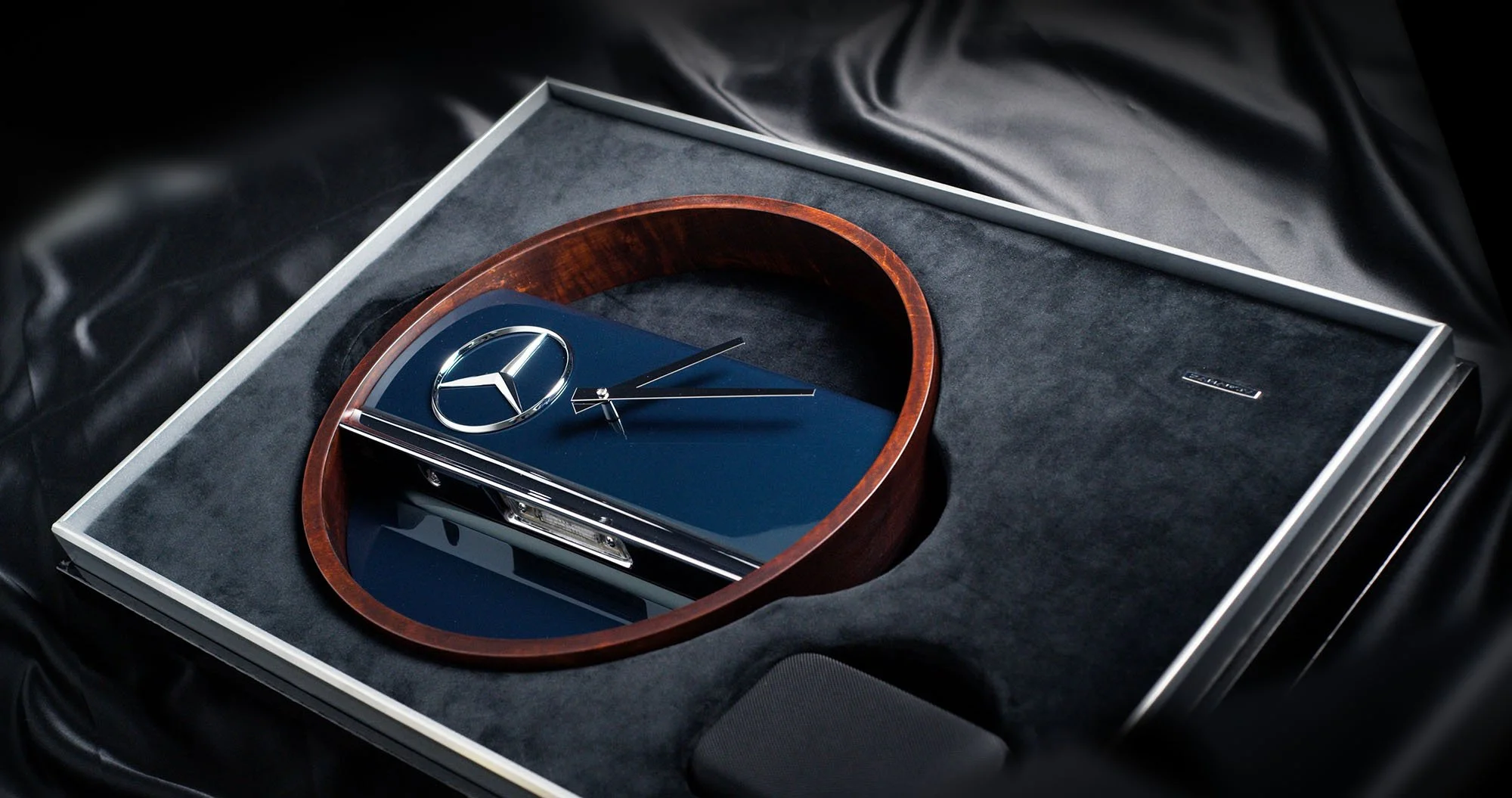
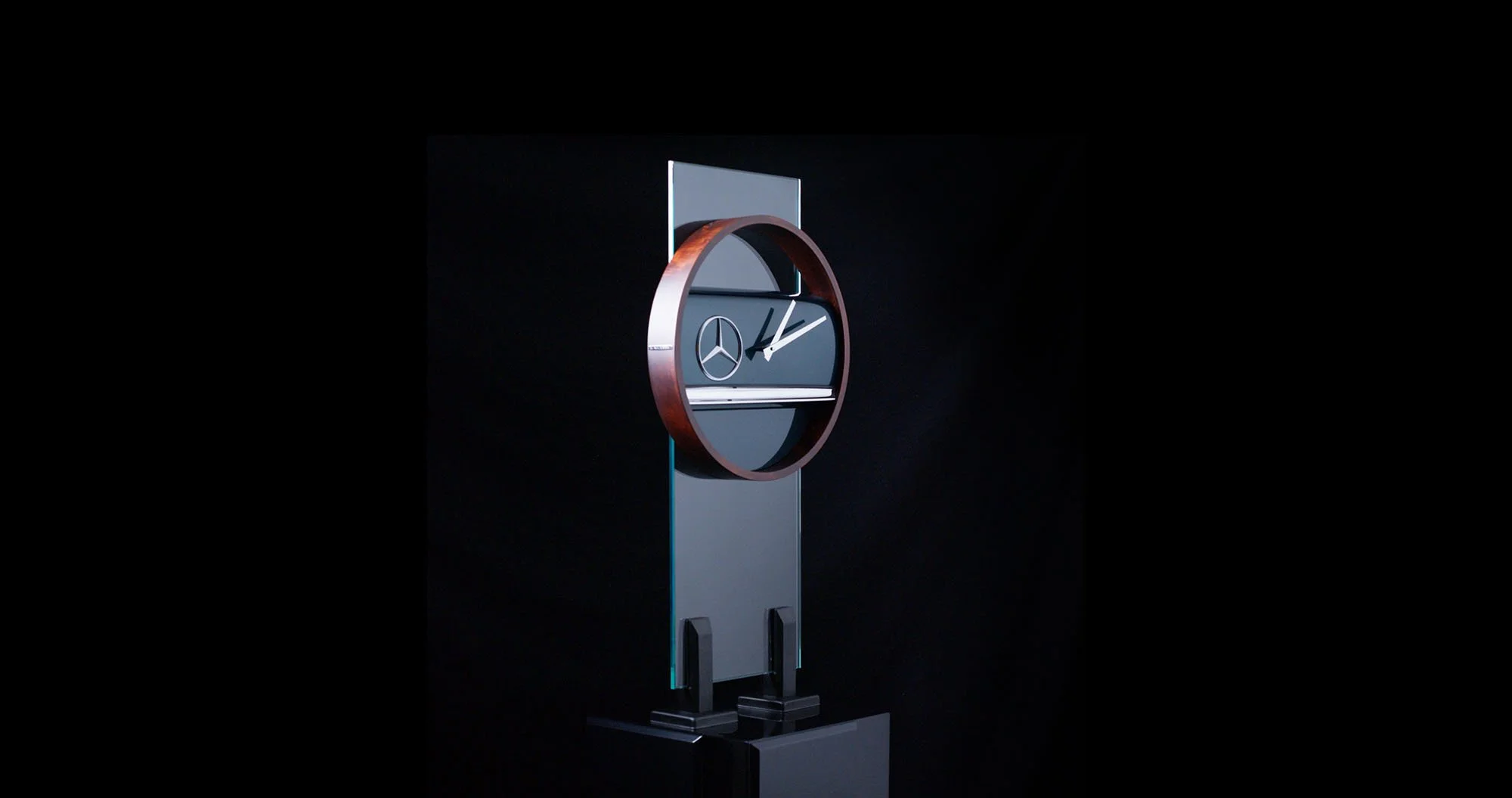
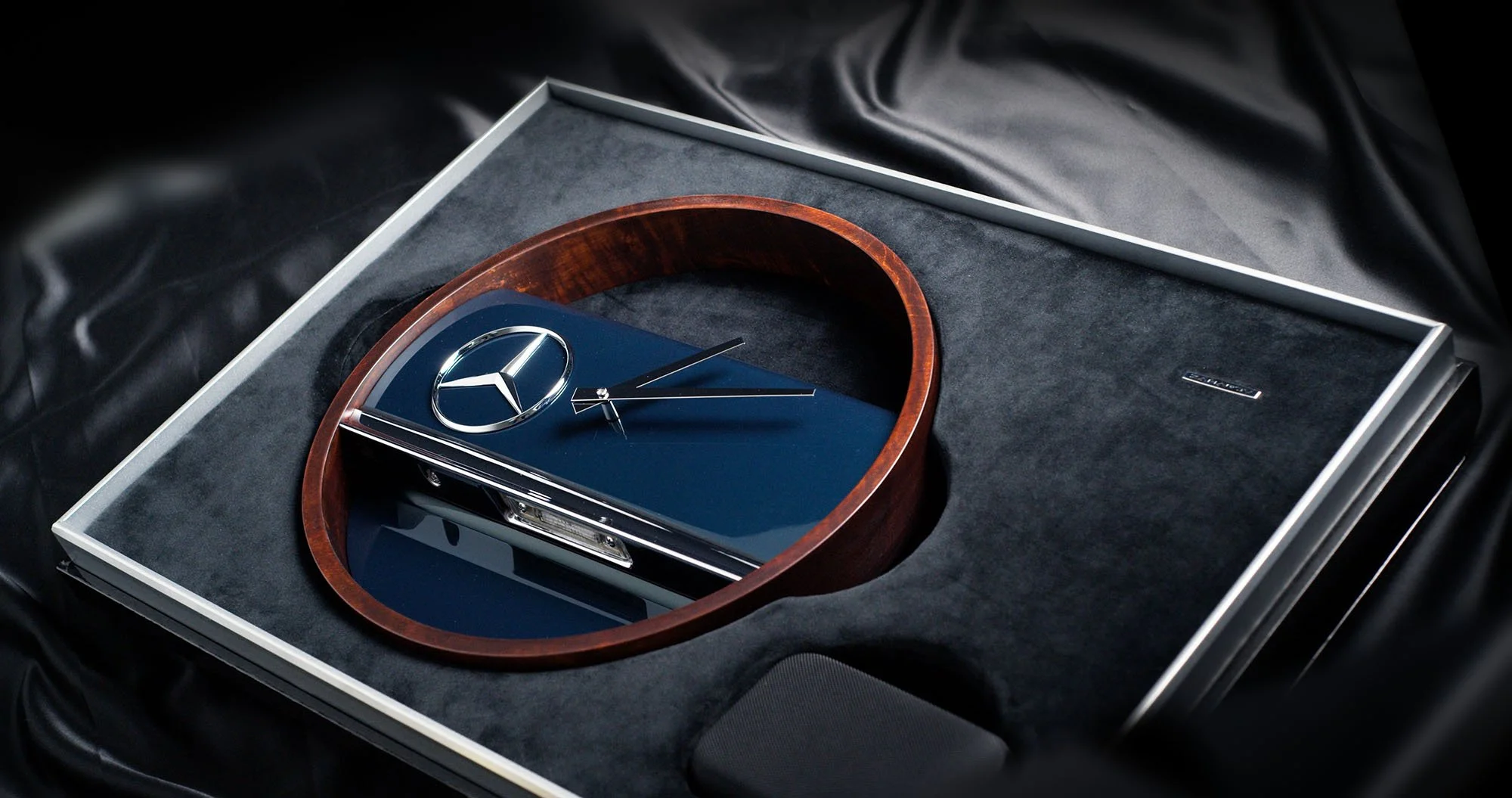
Mercedes Clock
In the Mercedes Clock project, I aimed to convey the strict, elegant and restrained character of German automotive design.
For this purpose, a classic circular clock shape was chosen, enclosed in a wooden ring made from solid British poplar. The minimalist form emphasises the aesthetics of the original automotive component and creates a visual balance between the wood, the automotive fragment and the clock hands.
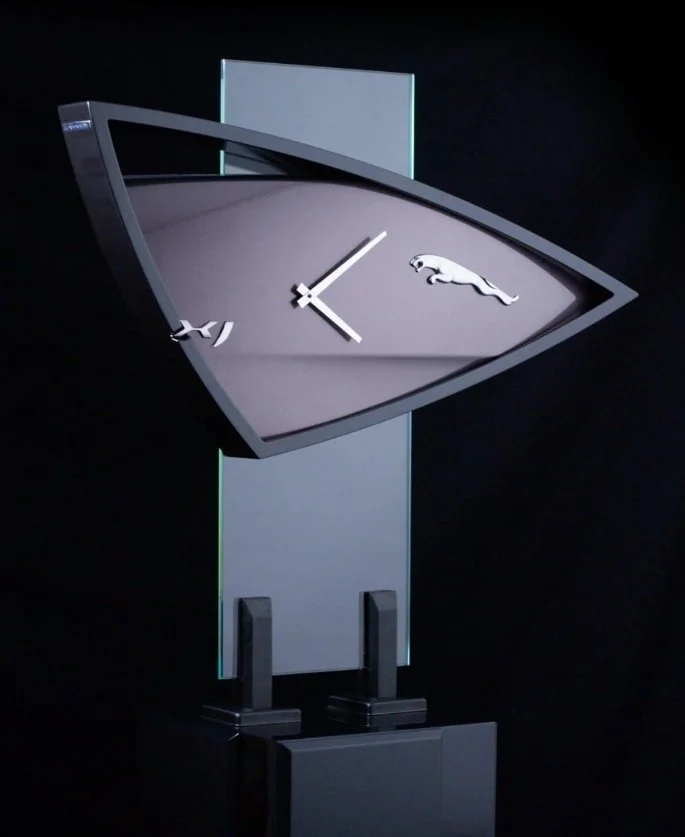
Jaguar Clock
The approach to the Jaguar Clock was completely different.
Here, I aimed to convey the feeling of the powerful leap of a jaguar — the main image of the Jaguar brand. The triangular shape of the clock case was designed to visually follow the trajectory of a leaping cat.
In this way, the shape of the object itself becomes a continuation of the character of the automobile, conveying a sense of speed, dynamics and movement.
Handcraft and Technology
Both projects were entirely handmade and are the result of combining traditional craft techniques with modern technologies.
The creation process included:
hand-working of wood;
cutting the ring from a solid piece of timber;
engraving;
design and manufacture of the clock hands;
chrome plating;
sanding;
painting and lacquering;
cutting and processing aluminium components;
hand assembly;
3D modelling;
laser cutting of metal.
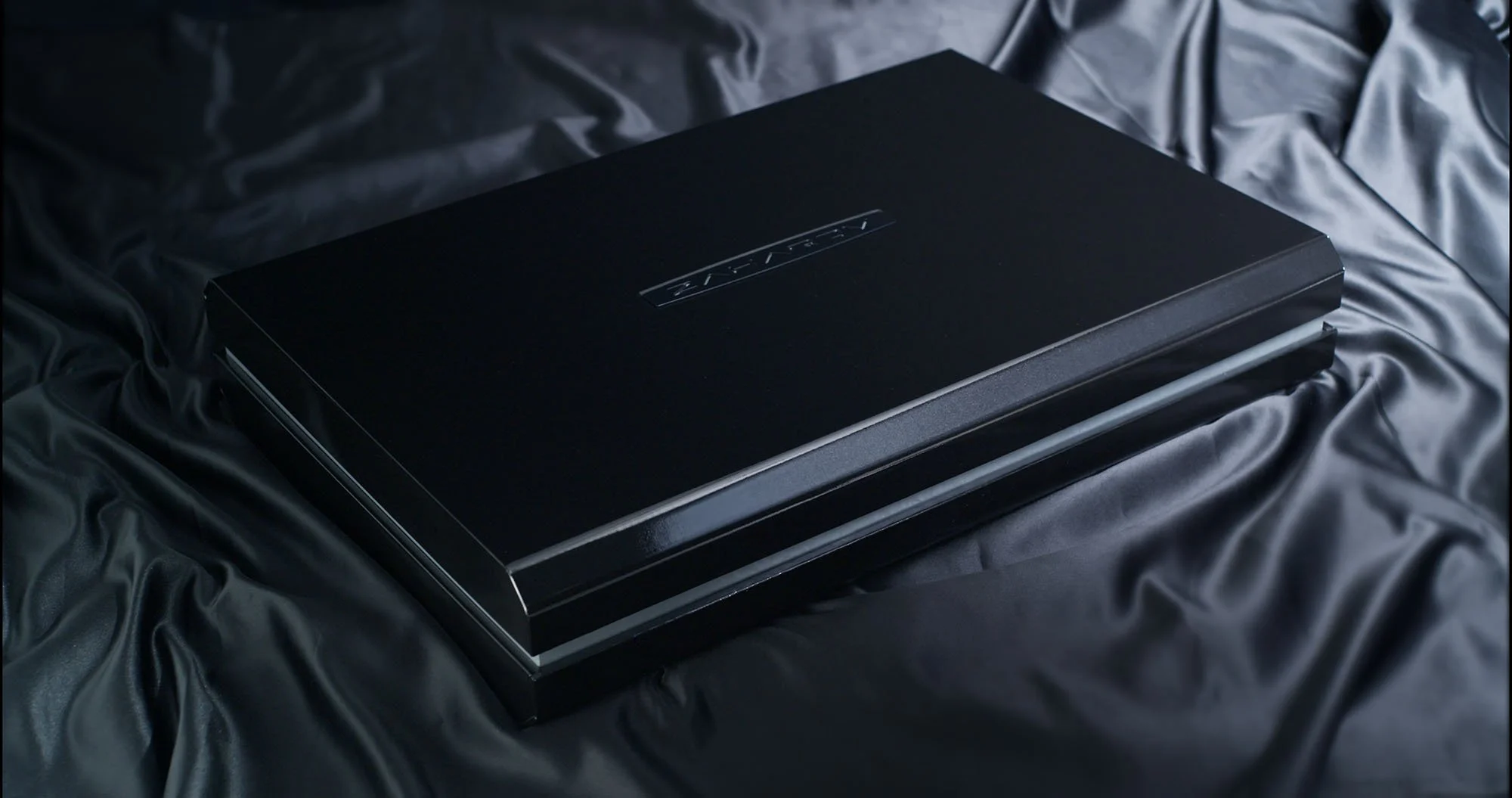
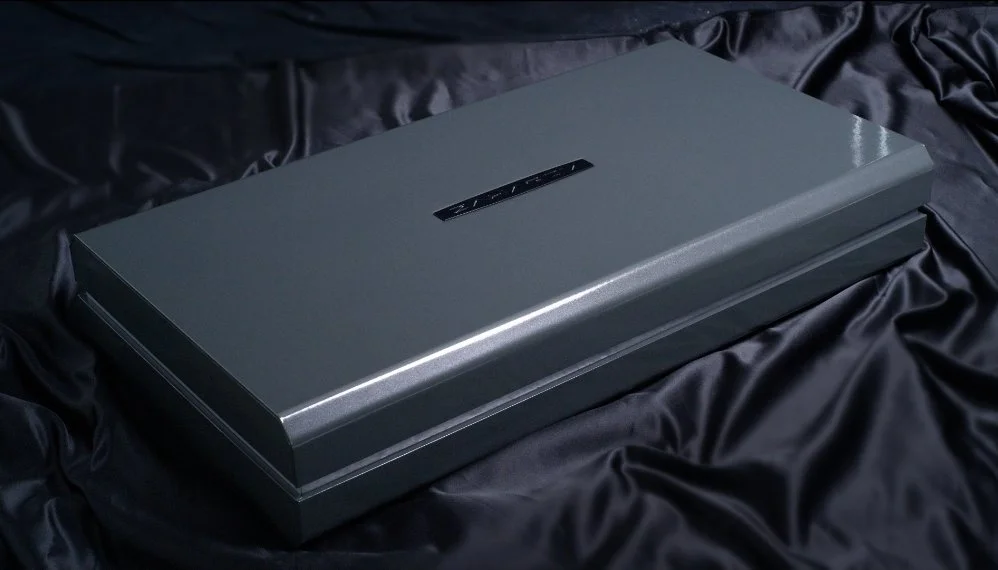
Particular attention should also be given to the presentation boxes with velvet interiors. Each box took more than three months of painstaking manual work to create.
In total, more than 2.5 years and over 3,000 hours of work were spent creating the first two projects.
This period includes not only the actual manufacturing, but also numerous stages of prototyping, design, testing, searching for suitable materials and solving technical challenges. Each stage required experimentation and adjustments.
Today, with the experience I have gained and a full understanding of the process, I believe that I could now complete a similar project in approximately four months.
My further work is focused on developing this idea and creating larger-scale works in which automotive components are given a new artistic and design life.